The lifespan of an electric gate is not a single number because the system has several components that age at different rates. The gate structure itself, whether timber, steel, aluminium, or wrought iron, has the longest potential life. The motor and gearbox sit in the middle. The electronic control board, safety sensors, and access control devices have the shortest expected service life. Understanding these different timelines helps you plan servicing, anticipate replacement costs, and make specification decisions at the point of installation that pay off over the full ownership period.
How Long the Gate Structure Lasts
A hot-dip galvanised and powder-coated steel gate will last 25 to 40 years before the structure itself needs attention beyond cosmetic maintenance. The galvanising protects the steel from corrosion even if the powder coat is chipped or scratched, and the combination provides a service life that outlasts most other external fixtures on a residential property. Aluminium gates have an even longer structural life because aluminium does not corrode. There is no practical upper limit on how long an aluminium gate structure will last if it is not physically damaged.
Wrought iron, properly maintained, will last indefinitely. There are wrought iron gates on English properties that are over a hundred years old and still structurally sound. The key is the maintenance cycle. Wrought iron needs repainting or re-coating every 8 to 12 years to prevent rust from establishing itself in the surface. Once corrosion penetrates deeply into the iron, it becomes a structural problem rather than a cosmetic one.
Hardwood gates have a lifespan determined almost entirely by the timber species and the maintenance regime. Iroko and European oak, properly maintained with a penetrating oil every one to two years, will last 25 to 30 years. Accoya, with its modified cell structure, carries a manufacturer guarantee of 50 years above ground. Softwood gates, unless treated with a preservative system and maintained religiously, may show significant deterioration within 10 to 15 years in Kent conditions. For coastal East Kent properties, salt air exposure accelerates timber breakdown on species that are not naturally durable, making Accoya or a hardwood species the only sensible specification.
No Cost, No Obligation
Looking for a Kent gate installer?
We match you with up to three vetted specialists. Free site surveys, written quotes, zero fees.
How Long the Motor and Gearbox Last
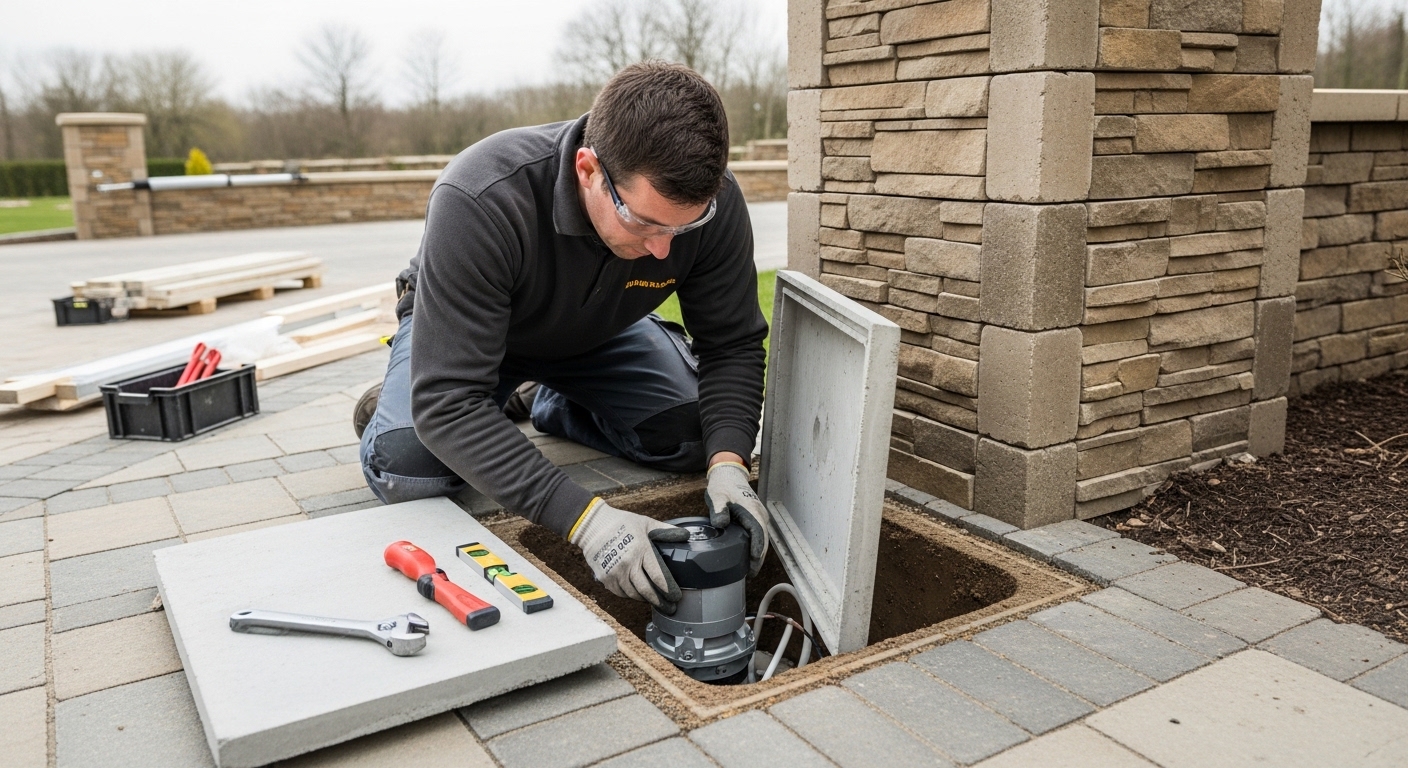
A quality gate motor from an established manufacturer (FAAC, BFT, CAME, Nice, or Beninca) has a typical working life of 10 to 15 years in residential use. That assumes it is correctly specified for the gate weight, properly installed, and serviced annually. The gearbox is usually the component that wears first, followed by the drive mechanism (the arm on a swing motor or the pinion on a sliding motor). Both are replaceable without changing the entire motor unit in most cases.
Motors that are undersized for the gate they are driving will fail sooner. A motor working close to its maximum torque rating on every cycle generates more heat, wears the gears faster, and stresses the control board. This is one of the most common causes of premature motor failure across Kent installations and is entirely avoidable with correct specification at the installation stage.
Underground motors, which are the standard in the premium West Kent market, are exposed to moisture in the chamber. The housing is sealed, but over a 10 to 15 year period, seals degrade and moisture can reach the internal components. Annual servicing that includes a check of the chamber drainage and seal condition extends motor life significantly. An underground motor that is never serviced in a poorly drained chamber may fail in 6 to 8 years.
How Long the Electronics and Access Control Last
Control boards typically last 8 to 12 years before the capacitors or relays degrade to the point where the board becomes unreliable. Replacement boards for the main motor brands are readily available and cost £150 to £350 fitted. This is a routine replacement rather than a system failure.
Photocell sensors last 10 to 15 years in most environments but can fail sooner in coastal positions where salt air corrodes the contacts. Video intercom systems have a shorter technology cycle. The hardware may last 10 years, but the software, app support, and connectivity standards may become obsolete in 5 to 7 years, requiring an upgrade to maintain smartphone integration. Keypad and proximity reader hardware is robust and typically lasts as long as the motor.
What Shortens the Life of Electric Gates
The single biggest factor that shortens gate lifespan is lack of annual servicing. A gate system that is serviced every year will last 50% to 100% longer than an identical system that is never serviced. The second factor is incorrect specification at installation. A motor that is undersized, a gate that is not galvanised, hinges that are too light for the gate weight, and foundations that are too shallow for the soil conditions all create problems that compound over time.
Environmental exposure matters in Kent specifically. Properties on the North Downs ridge face more wind load than sheltered valley positions. Coastal properties between Whitstable and Folkestone face salt corrosion that inland properties do not. Properties surrounded by mature deciduous trees will have debris in sliding gate tracks and leaf litter around motor housings that accelerates wear if not cleared regularly.
The Replacement Cycle for a Typical Kent Installation
A realistic replacement timeline for a well-specified and annually serviced electric gate system in Kent looks something like this. The gate structure lasts 25 years or more with no intervention beyond cosmetic touch-ups. The motor and gearbox need a major service or replacement at 10 to 15 years. The control board is replaced once during the gate life. Photocells and safety edges are replaced once. The video intercom may be upgraded once or twice as technology moves on. Remote handsets are replaced as needed, typically every 5 to 8 years as batteries and electronics age.
The total cost of ownership over a 25-year period, including the original installation, annual servicing, and component replacements, is roughly 1.5 to 2 times the original installation cost. On a £6,000 installation, expect to spend £3,000 to £6,000 on maintenance and replacement parts over the following 25 years. The annual cost of ownership works out at £360 to £480 per year, which most Kent homeowners consider reasonable for the convenience and security that automated gates provide.
How to Maximise the Life of Your Gates
Book annual servicing and do not skip it. Use an engineer who carries force measurement equipment and tests the safety systems properly, not just someone who lubricates the hinges and leaves. Keep sliding gate tracks clear of debris. Check hardwood gates for finish deterioration every spring and re-oil before the timber shows signs of drying. Report any unusual noise, slow operation, or erratic behaviour immediately rather than continuing to use the system until it fails completely. Address hinge wear at the point when it first becomes visible rather than waiting for the gate to drop.
At the specification stage, invest in the right motor for the gate weight, hot-dip galvanising on all steel components, quality timber species rather than treated softwood, and a motor brand with established long-term parts availability. The cost difference between a correctly specified installation and a budget one is typically 15% to 25% of the total. The lifespan difference is often double.
Getting the Right Specification for Long-Term Value
The installers in our Kent network specify for longevity as standard. Hot-dip galvanising on every steel gate. Motor brands with proven parts support for at least a decade. Timber species appropriate for the site exposure. Foundation depth matched to Kent soil conditions. Submit your enquiry and we will match you with up to three vetted specialists who will survey your property and quote for an installation built to last.