
Material is the decision that shapes everything else about a gate: how it looks, how long it lasts, how much maintenance it needs and how big a motor it requires. In Kent there is an extra factor, because a gate a few streets from the sea in Whitstable or Deal faces very different weather from one in a Weald village. Each material wins somewhere, and the old question of wooden against metal has a clearer answer once weight and location are on the table.
Timber: Oak, Iroko and Accoya
Hardwood remains the natural choice for oast houses, barn conversions and village lanes. Iroko is very durable and resistant to rot and insect attack, which is why it is sometimes used as a substitute for teak, according to the Wood Database. European oak also has very good resistance to decay and weathers to a silver grey if left untreated. Both are heavy: dried iroko weighs around 660 kilograms per cubic metre and oak around 675.
Accoya, a modified radiata pine, is marketed for exposed positions. Its manufacturer offers a 50-year warranty above ground and claims a 60-year service life and much less swelling than traditional timbers. Those are manufacturer claims rather than independent tests, but they explain why Accoya is often specified for coastal gates. Kent manufacturer Jacksons guarantees its treated softwood for 25 years against rot and insect attack, which sets a useful benchmark for cheaper timber.
Timber needs looking after. Expect to oil a hardwood gate regularly and check the hinges, and use stainless fixings, because joiners commonly warn that oak reacts with ordinary steel and stains black.
Looking for a Kent gate installer?
Up to three Kent installers will arrange a site survey and a written quote. No fee and no obligation.
Steel: Galvanised and Powder Coated
Steel is the most common material for automated gates, according to installer quoting tool Trade2Base, because it is strong, workable and affordable. Its weakness is rust, and the finish decides how long it lasts. Hot-dip galvanising coats the steel in zinc, which corrodes slowly in place of the steel. The Galvanizers Association shows how much location matters: an 85 micron coating lasts an average of 170 years where zinc corrodes at 0.5 microns a year, but only 34 years at 2.5 microns a year, and its postcode map lets you check your own site.
A powder coat over the galvanising gives the colour and adds a second barrier. Jacksons gives its galvanised steel railings a 25-year service life guarantee against rust. On the coast, ask for both layers, with a marine-grade powder coat over the zinc.
Aluminium
Aluminium does not rust and is much lighter than steel, which Trade2Base describes as kind to the motor. A lighter gate can use a smaller motor and puts less load on posts and hinges, which matters on sloping or exposed plots. It costs more than steel for the same design, and it does not take the ornate detailing of forged iron, but for modern houses and seafront homes in Thanet, Herne Bay or Folkestone it is often the best long-term value.
Wrought Iron
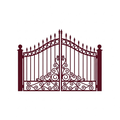
Ornate iron gates suit large period houses in Sevenoaks, Tunbridge Wells and the West Kent villages. They are very heavy, and Trade2Base notes they need the strongest motors and the best foundations. That weight is the hidden cost: it can push a gate into a more expensive motor tier and demands deep footings for the piers. Galvanising before painting is just as important on iron as on steel.
Composite
Composite gates use plastic-and-wood-fibre slats on an aluminium frame, sold on the promise of never needing paint. They suit modern homes and owners who want the look of boarding without the oiling. They are newer to the market than timber or steel, so long-term performance in UK weather is less proven, and warranty terms vary between makers.
Weight Decides the Motor
Motor makers size their products by weight and length. Nice, for example, uses tiers for sliding gates up to 400 kilograms, up to 600 kilograms and above, and for swing gates by leaf length up to 3.5, 4.5 and 7 metres. A fully boarded hardwood or iron gate can move you up a tier, which costs more and can mean a larger, more visible motor. If you want a heavy material on an automated gate, make sure the motor is chosen after the gate is designed, not before.
What Each Material Costs
Trade2Base gives these installed price bands for a pair of leaves, before automation: timber £600 to £2,500, galvanised and powder-coated steel £800 to £3,500, aluminium £1,200 to £4,000, and wrought iron £1,500 to £6,000 or more. MyJobQuote's platform data shows wooden and metal electric gates of the same size pricing within the same bands, so for a simple design the material choice changes the price less than people expect. Bespoke ironwork and wide hardwood gates are where costs climb, and the gate itself is only part of a full installed quote.
Wooden or Metal Gates?
For most homeowners the real choice is wood against metal. Wood looks warm and traditional, suits rural and period settings, and is what planning officers usually expect in conservation areas and National Landscapes. It needs regular maintenance, moves with the weather and is heavy. Metal suits town houses and modern homes, needs little maintenance if properly galvanised, and comes in lighter options. Owner experience backs up spending on quality either way: one Mumsnet poster said cheap gates they fitted themselves looked rubbish after five years, while their custom gates still opened with fingertip pressure three years on.
Which Material for Which Part of Kent
On the coast, from Whitstable round to Folkestone, aluminium or galvanised steel with stainless fixings lasts longest. In the Weald, around Cranbrook and Tenterden, oak or iroko suits the farmhouses and oasts. In the West Kent commuter belt, painted iron or steel on brick piers suits the period houses. On new-build estates across North Kent and Ashford, aluminium or powder-coated steel keeps maintenance low. Whatever you choose, ask the installer how the gate will be braced, how heavy it will be and which motor it needs.
Finishes and Colours
Metal gates are powder coated in a RAL colour, and the colour matters more than people expect. Black and dark greens are the usual choice for period houses and conservation areas, where councils tend to favour colours that recede. Anthracite grey suits modern homes. Light colours show dirt and, on the coast, any rust bleeding from a damaged edge. Ask for a colour sample on the actual finish before you approve the order.
Timber can be left to weather, oiled to keep its colour, or painted. Painted timber, often white or cream on weatherboarded houses in the Weald, needs repainting every few years, while oiled hardwood needs a fresh coat roughly once a year. Unfinished oak or iroko will turn silver grey and still last well.
How Long Each Material Lasts
With reasonable care, all of these materials will outlast the motor, which usually needs replacing first. Well-maintained hardwood lasts for decades, and Accoya carries a 50-year warranty above ground. Galvanised and powder-coated steel lasts for decades inland, with the Galvanizers Association figures showing how much the coast shortens that. Aluminium is the least affected by weather of all. The weak points are almost always joints, fixings and finishes rather than the material itself, so quality of fabrication matters as much as the material you choose.
When comparing quotes, ask each installer what the gate will weigh, how the leaves are braced, what finish or treatment is included, and what the warranty covers on the gate as opposed to the motor. A clear answer on all four is a good sign that the gate has been designed for your entrance rather than picked from a catalogue.