
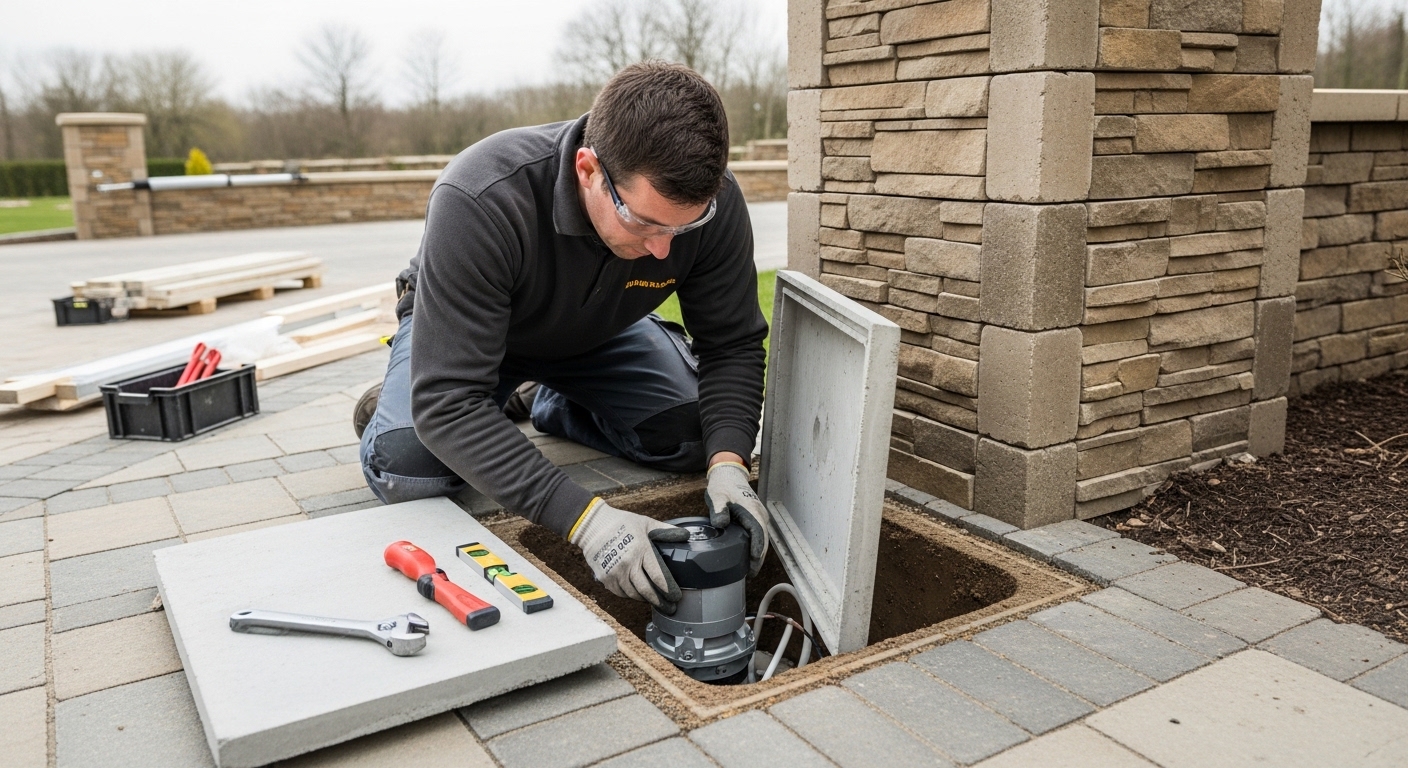
Plenty of Kent homes already have good gates that nobody wants to get out of the car to open. One PistonHeads member described exactly that in February 2025: a house bought with manual two-leaf metal gates, an owner sick of getting wet opening them, and a retrofit with motors on the pillars, sensors, phone access and a camera. It is usually the cheapest route to an electric entrance, but it is not as simple as bolting a motor to a gate.
Is Your Gate Suitable?
A gate that will take a motor swings or slides freely by hand without dragging, sits on tight hinges with no sag, and hangs on posts or pillars that do not move when you push the gate. Its weight and leaf length need to fall within a motor's rating, and if it fronts a street it must open inwards or slide. You also need a way to get power to it. Checkatrade notes that existing gates can often be upgraded, but only if they are strong enough and compatible, which is why a site visit comes first.
The Health and Safety Executive points to the weak spots: closing gaps at the hinges that create crushing points, a gate running away down a slope, and mountings that cannot resist the forces of a moving gate and the wind. On an old installation, those are exactly where problems hide.
Looking for a Kent gate installer?
Up to three Kent installers will arrange a site survey and a written quote. No fee and no obligation.
The Same Rules as a New Gate
HSE is explicit that the same requirements apply when existing manual gates are converted to powered operation as when a new gate is installed. The person who motorises the gate becomes its manufacturer under the Supply of Machinery (Safety) Regulations 2008, and owes you a Declaration of Conformity, user instructions and conformity marking. A retrofit needs the same safety edges, photocells and force testing as a brand new gate.
Choosing a Motor
Ram motors fix between the post and the gate and push the leaf open. They are robust and suit most swing gates with enough space behind the post. Articulated arm motors fold like an elbow and suit gates hung on wide brick pillars, where a ram would not fit. Underground motors sit in a buried box beneath each hinge and are almost invisible, which suits period houses and listed settings, but they need excavation and proper drainage. Sliding gates use a motor with a toothed rack along the bottom of the gate.
Manufacturers size motors by the gate. Nice, for example, rates swing motors by leaf length, in tiers up to 3.5, 4.5 and 7 metres, and sliding motors by weight. An installer should weigh and measure your existing leaves before recommending a model, not after. Heavier gates, such as solid hardwood or iron, often need a bigger motor than people expect.
Hinges and Crush Points
The hinge side of a swing gate is one of the most dangerous places on an automated entrance. The Door and Hardware Federation notes that numerous serious injuries and one death have occurred in this area, and recommends guards, safety edges or constant-gap hinges. Older gates often have a gap between the gate and post that narrows as the gate opens, which is exactly the hazard an automated gate turns deadly. Expect an installer to deal with it, even if it means new hinges.
Wind and Solid Gates
Solid, close-boarded gates catch the wind. One PistonHeads contributor, describing a 4 metre wooden farm gate, explained that wind loading on solid gates trying to close is what strips motor gears, at £500 to £1,000 a rebuild. On exposed plots in the Weald or on the coast, an open design, a motor with a margin to spare, or an electric lock to hold the gate closed all help.
What a Retrofit Costs
Trade2Base, a quoting tool used by installers, puts a retrofitted automation kit on existing gates at £1,500 to £3,000 installed, with kit-only prices of £700 to £1,800 for a pair of ram or arm motors, £1,200 to £3,000 for underground motors and £900 to £2,800 for a sliding kit. A new armoured supply from the house adds £400 to £1,200. Owners on PistonHeads quote kits from around £800 for an electromechanical set and £1,700 for hydraulic. Underground retrofits cost more: one 2018 quote to automate a wooden gate with in-ground motors came to £5,399 plus VAT, with the electrics extra. Across Kent, automating existing gates usually costs roughly £1,400 to £3,800, well below the price of new automated gates.
Drainage for Underground Motors
If you choose underground motors, drainage decides how long they last. A PistonHeads owner went through three motors at about £800 each, replacing them every two years, until drain holes were added to the motor boxes. Another lost a motor when mortar from new paving blocked the soakaway. On clay, on the Medway or Stour floodplains, or anywhere water collects, ask exactly how the chamber will drain, or choose an above-ground motor.
Power and Access Control
A retrofit is a good moment to think about how you will open the gate. Remote fobs are the basics; keypads, intercoms and phone apps add convenience, and a camera lets you see who is there. Many motors include a manual key release for power cuts, and battery backup keeps a 24 volt system working through short outages. If the gate is a long way from the house, solar power may avoid trenching.
Can You Fit a Kit Yourself?
DIY kits are cheap; one Mumsnet poster planned to automate gates with a £400 kit. But the legal duties do not disappear because you are the installer, and a gate without proper safety edges and force testing can injure someone. Gate Safe warned in July 2026 that online advice, including AI tools, cannot carry out the risk assessment a powered gate needs. If you go ahead yourself, have a trained installer commission and force test the result.
Retrofits on Period Kent Gates
Many of the best retrofit candidates are the fine wrought iron and hardwood gates around Sevenoaks, Tunbridge Wells and the West Kent villages, where the gates are worth keeping and the owners want them to stay looking original. Underground motors or slim arm motors on the inside face of the pillars keep the look intact, and adding motors does not in itself need planning permission. At a listed house, check whether fixing equipment to historic piers needs consent.
Ask the installer to inspect the gates before quoting, and expect them to recommend hinge, post or foundation work first if the gates need it. A quote that skips straight to the motor without looking at what it will be moving is the one to be wary of, and a sound automated gate system starts with a sound gate.
Gates That Open the Wrong Way
Older gates sometimes open outwards over the pavement or road. That was never allowed for a gate onto a street, and section 153 of the Highways Act 1980 lets the highway authority require it to be altered. Automating an outward-opening gate would make the problem worse, so a retrofit is the moment to fix it. Usually that means rehanging the leaves to open inwards, which may need new hinges, a different motor position and a check that the drive is deep enough for the leaves to swing clear of a parked car. Where the drive is too short, converting to a sliding gate can be the better option.